
Japanese website localization goes beyond translating your website into Japanese. It means adapting design, trust signals, forms, and payments to help Japanese customers and partners understand your business and decide whether to contact or buy from you.
However, it is hard to understand specifically what Japanese customers want from your website. What designs or trust signals do they look for? To help founders entering Japan, we have written an article that is a guide and checklist for localizing a website. This article will go over explaining translation vs. localization to help you create a phased plan on how to localize your first website.
Key Takeaways
- Gain the trust of Japanese visitors
- Support Japanese decision-making
- Optimize the buying process
- Have a phased budget and plan for localization
- Start with the minimum viable site and improve from real Japanese feedback
Translation vs. localization: what’s the difference?
Translation: A translated website has the same pages, just in Japanese. This is fine for people who already know what they want.
Localization: A localized website is planned and written for Japanese readers, showing them that the company is here to stay in Japan.
Why does website localization matter for entering the Japanese market?
For Japanese website localization, trust and credibility matter most to Japanese businesses and customers. Now more than ever, Japanese businesses and customers focus on buying from businesses online. When Japanese readers visit your website, it is the first impression. Japanese buyers, partners, banks, and landlords check your website before they meet you. The website is the first test of whether your company is right for them.
How do I design a website that Japanese customers trust?
So how can you reassure your Japanese readers that you are a credible and localized company? Here are some of the signs that Japanese visitors look for.
Why do Japanese websites look so dense?
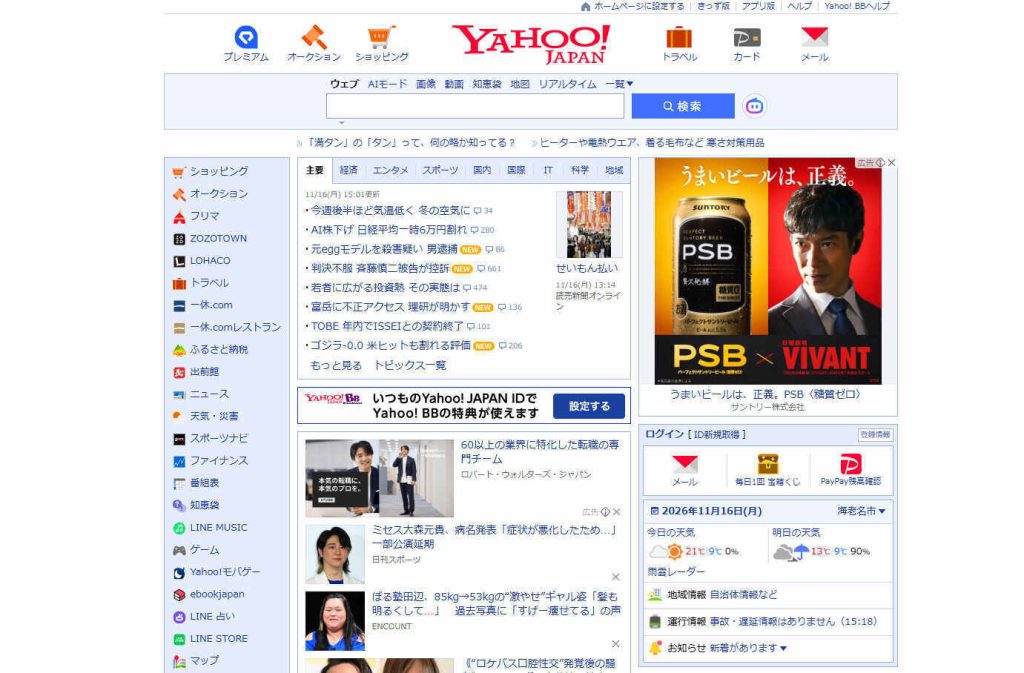
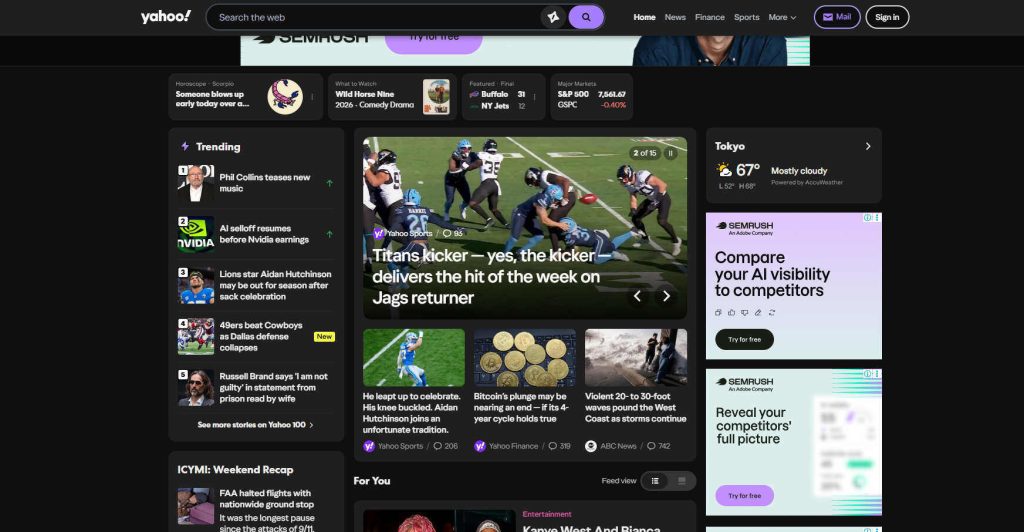
Some Japanese websites provide extensive product specifications, pricing details, FAQs, and support information. These details can help visitors evaluate a purchase or share information internally. Include what your customers need to decide, while keeping navigation clear and pages easy to scan. A clean design can work equally well when it answers those questions. Your Japanese web design should also work well on mobile. The screenshots below compare Yahoo! Japan and Yahoo.com; these portal layouts are examples, rather than templates every business should copy.
Trust signals Japanese visitors look for
B2B trust
When Japanese businesses visit your website, they look at your company profile (会社概要). On your company profile, you should have the capital, founding date, address, and the representatives of the company. The representatives should also include a short message (代表挨拶). Having Japanese client logos, case studies, and certifications will further show your company’s achievements and previous work.
B2C trust
While Japanese customers will look at your company profile like businesses, they will be more interested in seeing how local your company is. Your company should also have a Japanese phone number and business hours to show that you have a presence in Japan.
Cultural considerations in visuals and messaging
Finally, your website should have photos of people and teams that work at the company. Showing visitors on your website that your company has real people working adds more trust. On top of that, having seasonal cues like acknowledging holidays and local events can help show that your company is local. For more about Japanese business manners, check out our podcast with Rochelle Kopp!
3 ways to turn your visitors into clients
When it comes to localizing a B2B website, one key aspect you should focus on is supporting Japanese decision-making. There are many ways to do this, as Japanese buyers circulate materials internally and build consensus before contacting a vendor. Here are some ways to support that.
Build for internal circulation
Some notable small features that may help Japanese visitors would be downloadable PDFs, comparison pages, simplified pricing, security, and implementation documentation. This will help visitors to be able to freely research and learn more about your company. Additionally, adding an information request portal will help visitors to learn more about the company rather than an inquiry. Through this, visitors are able to build a consensus (nemawashi) to see if working with you is a good choice.
Rethink your calls to action
When localizing your website into Japanese, you have to rethink how you call to action. Japanese visitors may be intimidated or turned away if you are aggressive in how you call them to action. For example, instead of a “Book a demo,” use inquiry (お問い合わせ) forms to make it low-pressure. When responding to these inquiry forms too, respond quickly and in an appropriate tone in Japanese.
Give your Japan champion what they need
When trying to win over Japanese decision-makers, there are several ways to help show your company’s credibility. For example, include case studies from Japanese companies, implementation timelines, and support details. Another way could be through word of mouth by expanding your network. One way you can expand your network and meet more businesses is by joining a chamber of commerce in Japan. Check out our article on Chambers of Commerce in Japan!
4 ways to localize forms, payments, and copy
If your business relies on transactions on your website, localizing forms and payments is an important step. Not localizing forms and payments on your website may give a bad impression to Japanese visitors and may lose potential clients while they are in the middle of a transaction. Here are some of the ways to localize your forms and payments.
Forms built for Japanese names and addresses
First, your forms have to be formatted for Japanese personal information. When entering the name, the family name comes first, with furigana fields below. Additionally, postal code auto-fill, a prefecture dropdown, and Japanese address order will make it much easier to fill out the form. Finally, from a technical aspect, you have to be careful with full-width and half-width characters.
Payment methods Japanese customers expect
Choose payment methods based on your customers, transaction size, and business model. Options include credit cards, convenience-store (konbini) payments, bank transfers, and digital wallets such as PayPay. Carrier billing may suit some digital services, while invoice payment (請求書払い) may be useful for B2B customers. You do not need to offer every method. Confirm provider availability, fees, settlement timing, and refund procedures before deciding which options to support.
Ways to rewrite website content
Choosing the right tone for your website is another aspect to consider. Being too casual can seem untrustworthy, while being too stiff can read as bureaucratic. Keeping a consistent style of tone using a glossary will help as well. Check out our articles on Japanese business phrases!
Using AI translation
When it comes to using AI for translation, you should use AI to create the first drafts of the translation. After that, a native review would be needed to check company information, CTAs, and keigo. Additionally, transcreation, a way of translating with creative copywriting, should be used for taglines and slogans.
How to start Japanese website localization
When looking to localize your website in Japan, you have to create a phased plan you can budget for. A phased plan lets you choose services, estimate costs, and avoid fully committing. This should not be an all-or-nothing project.
The minimum viable Japanese site
First, you should focus on localizing the homepage, pricing, legal pages, contact, and one strong case study. Focusing on these first will lay the foundation for localizing your website. Everything else can stay in English for now. Another thing you should focus on is the Illustrative cost estimates and timelines for creating the website if you are using services.
Choosing a translator or localization partner
When choosing a translator or localization partner, there are some things to consider. Ask Questions about the service, look for red flags like no previous work, and consider how to test quality when you don’t read Japanese. Here is an Ultimate Guide to Distribution Partners in Japan for founders building a local sales channel.
If you’re looking for a bilingual team to guide your market entry, get in touch with our team for consultation.
After launch: keeping it working
After launching the localized website, keeping track and getting feedback is important. Keep track of Japanese inquiries and whether the translations are in sync with your product updates. Even after developing your new website, keep track of Japanese inquiries, monitor your Japanese search engine optimization performance, and ensure translations stay in sync.
Japanese website localization checklist: B2B vs B2C
How to use this checklist: Recommended items are practical starting points. Depends means the item should be chosen for your business model, customers, or service. Required where applicable identifies a legal obligation that applies only when the relevant conditions are met. Check payment-provider requirements separately. B2B and B2C labels alone do not determine every obligation.
| Area | Element | What to do | B2B | B2C |
|---|---|---|---|---|
| Design | Product details and FAQ (よくある質問) | Answer questions on the page itself: specs, pricing details, support, and FAQ. | Recommended | Recommended |
| Design | Mobile-first layout | Design for smartphones first; test on iPhone and Android. | Recommended | Recommended |
| Design | Japanese typography | Japanese font stack (Noto Sans JP, Hiragino, Yu Gothic), line height about 1.7, Japanese punctuation 「」、。 | Recommended | Recommended |
| Design | Local formats | Dates as 2026年11月11日, prices in 円 or ¥, Japanese phone and postal formats. | Recommended | Recommended |
| Design | Language switcher | For a multilingual site, use clear labels such as 日本語 / English and stable URLs for each language version. A /ja/ subfolder is one option. | Depends | Depends |
| Trust | Company profile (会社概要) | Japanese company name, capital, founding date, address, representative, and business description. | Recommended | Recommended |
| Trust | Message from the representative (代表挨拶) | Short signed message with photo: why you are in Japan and for how long. | Recommended | Optional |
| Trust | Japanese contact details | Show accurate contact details, support hours, and your actual business location. Provide Japanese-language support where available; check any disclosure or payment-provider rules that apply. | Depends | Depends |
| Trust | Case studies / reviews (導入事例 / お客様の声) | Named Japanese clients with results; for B2C, customer reviews, and ratings. | Recommended | Recommended |
| Trust | Certifications (ISMS / ISO 27001, Privacy Mark) | Display only certifications your company holds. Security certifications may help with enterprise procurement, depending on the buyer and service. | Depends | Depends |
| Trust | Real team photos | Photos of the actual team, ideally Japan-based staff. No stock photos. | Recommended | Recommended |
| Trust | Media and partner mentions (メディア掲載) | Japanese press coverage, awards, partner logos. | Recommended | Recommended |
| B2B sales | Downloadable materials (資料ダウンロード / 資料請求) | PDF brochure buyers can circulate internally; short form to download. | Recommended | Optional |
| B2B sales | Pricing page (料金プラン) | Explain plans or the quotation process. For consumer offers, check applicable tax-inclusive price-display rules; for B2B offers, make the tax treatment clear. | Recommended | Recommended |
| B2B sales | Security documentation | Provide security and data-handling information appropriate to your service. SaaS or enterprise buyers may request a procurement security questionnaire. | Depends | Depends |
| B2B sales | Implementation and support (導入の流れ / サポート体制) | Step-by-step onboarding timeline, Japanese support hours and channels. | Recommended | Recommended |
| B2B sales | Low-pressure calls to action | Offer a suitable next step, such as お問い合わせ, 資料請求, a trial, or a demo. Match the action to the visitor’s readiness and test the wording. | Recommended | Recommended |
| B2B sales | Webinars and seminars (セミナー) | Consider an event page and recordings if educational sessions suit your audience and sales process. | Recommended | Optional |
| Forms & payments | Name and Address fields | Collect only the information you need. Where relevant, support family-name-first entry, furigana, Japanese address order, prefecture selection, and postal-code auto-fill. | Depends | Depends |
| Forms & payments | Full-width / half-width input | Accept and normalize full-width and half-width characters where appropriate. Keep necessary validation and give clear instructions when an entry needs correction. | Recommended | Recommended |
| Forms & payments | Credit cards incl. JCB | If accepting cards, check which networks your provider supports, including JCB, and choose based on your customers and fees. | Depends | Depends |
| Forms & payments | Local payment methods and Invoice payment (請求書払い) | Choose among konbini, digital wallets, bank transfers, and carrier billing to suit your customers. For B2B, consider invoice payment and agree payment terms. | Depends | Depends |
| Content | Native review of translation | Use a qualified Japanese-language reviewer for important copy, whether drafted by a person or AI. Check company information, CTAs, terminology, and tone; maintain a glossary. | Recommended | Recommended |
| Content | Transcreated taglines | Rewrite slogans and headlines for Japanese readers instead of translating them. | Depends | Depends |
| Content | Japanese customer support | Reply to inquiries in Japanese, ideally within one business day. | Recommended | Recommended |
| Content | Seasonal content | Golden Week, Obon and year-end closure notices (年末年始休業のお知らせ), localized seasonal campaigns. | Recommended | Recommended |
| SEO & marketing | Japanese keyword research | Research the Japanese terms your customers use, including kanji, katakana, and English variants. Check search intent rather than directly translating English keywords. | Recommended | Recommended |
| SEO & marketing | Japanese metadata and language versions | Write Japanese page titles and meta descriptions. Where equivalent pages exist in multiple languages or regions, follow Google’s hreflang guidance. A /ja/ subfolder or .jp domain is an option, not a universal requirement. | Recommended | Recommended |
| SEO & marketing | LINE official account | Link or QR code on the site; LINE passed 100 million monthly users in Japan in December 2025. | Optional | Recommended |
| SEO & marketing | Analytics and feedback loop | Track Japanese inquiries and form drop-off; test with Japanese users after launch. | Recommended | Recommended |
| Legal | Commerce disclosure page (特定商取引法に基づく表記) | For applicable consumer distance sales, publish the seller details and transaction terms required by the Specified Commercial Transactions Act. Payment-provider rules may also apply to B2B sellers: check Stripe’s disclosure requirements and your own provider’s rules. Keep the page easy to reach from the homepage and payment pages. | Depends | Required where applicable |
| Legal | Japanese privacy policy (プライバシーポリシー) | Explain how you collect and use personal information and provide disclosures required for your data handling. Overseas hosting does not automatically mean a transfer to a foreign third party. Check who can access the data, your contracts, and applicable safeguards or consent requirements using the PPC’s overseas-server guidance. | Required where applicable | Required where applicable |
| Legal | Terms of service (利用規約) | Provide terms suited to your service in clear Japanese, and explain which language governs if versions differ. Check any sector-specific requirements. | Recommended | Recommended |
| Legal | Tax-inclusive prices (総額表示) | Where total-price display rules apply to prices advertised to consumers, show the consumption-tax-inclusive amount. B2B transactions and quotations or invoices are generally outside this display obligation. See the NTA’s total-price display guidance. | Depends | Required where applicable |
| Legal | Invoice registration number (T + 13 digits) | Qualified invoice issuer registration is voluntary. Assess whether it suits your customers and tax position. If registered, include the required registration details on qualified invoices. See the NTA’s invoice Q&A, including registration being voluntary. | Depends | Depends |