
Email marketing in Japan still works, but not in the way many overseas companies expect.
If you take a generic English-language outbound playbook, translate it into Japanese, and send it to a cold list, the results are usually weak. That does not mean email is dead. It means email in Japan works best when the audience is well targeted, already has some context, and sees a clear reason to trust the sender.
For B2B companies, email is usually strongest when it supports a wider sales process. It can work well for seminar invitations, trade show follow-up, business card follow-up, nurturing warm leads, reactivating dormant contacts, and moving interested prospects toward a demo or meeting. It is usually much weaker when you try to force a cold lead straight into a sales call.
This article focuses on B2B email marketing in Japan. It covers where email fits, how Japanese outreach differs, how to source contacts, what legal points matter, what benchmarks to watch, and what foreign companies often get wrong.
Key takeaways
- Email marketing can work in Japan, especially for B2B lead nurturing, follow-up, and re-engagement.
- Warm audiences usually outperform cold lists by a wide margin.
- In Japan, email often works better when it follows an existing touchpoint such as a referral, seminar, trade show, business card exchange, website inquiry, or LinkedIn interaction.
- Polite context matters. A good Japanese B2B email usually explains why you are reaching out, why the topic is relevant, and what low-pressure next step you are suggesting.
- Email should usually be part of a wider process that includes content, landing pages, phone follow-up, and sales qualification.
- Compliance matters. Sender identity, unsubscribe handling, and personal data handling should not be treated casually.
What is email marketing in Japan?
In a B2B context, email marketing in Japan usually includes a few practical use cases:
- Newsletter emails to existing leads or customers
- Webinar or benkyoukai invitations
- Trade show and business card follow-up
- Nurturing leads who downloaded a guide or contacted you before
- Re-engaging old prospects who were interested but did not move forward
- Follow-up after a demo or meeting
- Targeted outbound emails to carefully selected companies
That last category is where many foreign companies struggle.
In Japan, the main question is not whether you can send email. The real question is whether the recipient has enough reason to care. If there is no context, no trust, and no clear relevance, even a well-written message may be ignored.
Is email marketing still effective in Japan?
Yes, but it is more useful as a trust-building and follow-up channel than as a pure cold-acquisition channel.
For many B2B companies, email works well when the recipient already knows the problem, has heard of the solution category, or has interacted with your company before. That could mean they met you at an event, downloaded a report, saw your content on LinkedIn, were introduced by a partner, or visited your website.
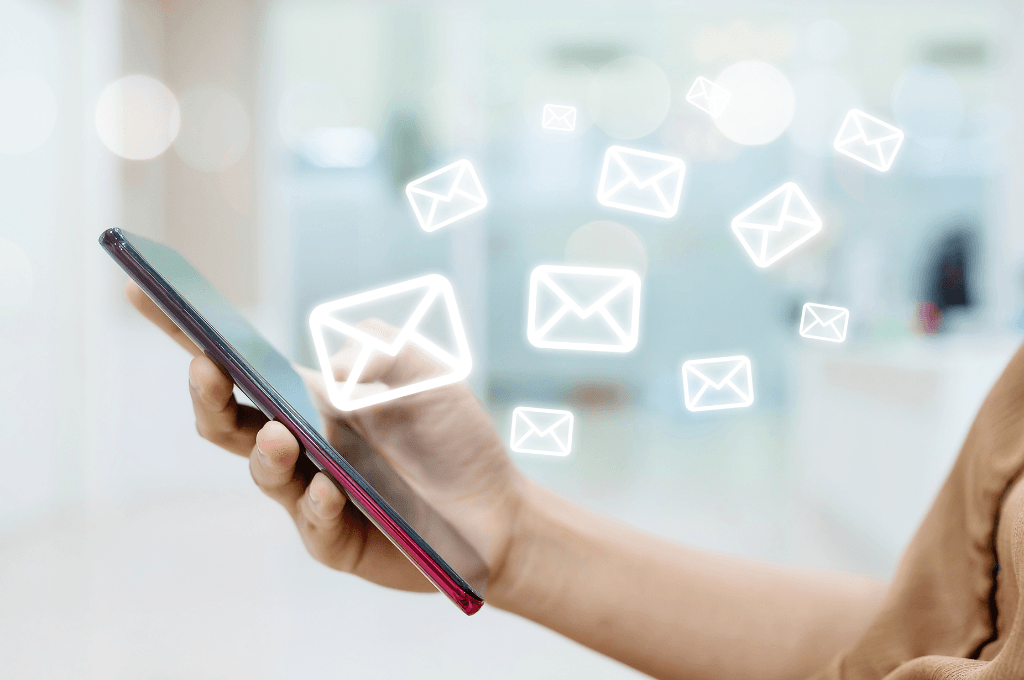
That is why email often performs best in Japan when it is tied to a broader lead generation in Japan strategy. For many companies, the real gain comes when email supports the sales process rather than trying to replace it.
Email is also useful because it can carry more context than a short social post or chat message. In a market where buyers often want to understand the company, the offer, the use case, and the proof before taking action, that matters.
When email works best in Japan
Email tends to work best in Japan when the recipient already knows your company, clearly has the problem you solve, or comes to the email with some existing context. That context may come from a referral or mutual connection, a trade show or seminar, prior interaction with your content, or a previous visit to your website. It also helps when the email offers useful information rather than only asking for a meeting, and when the landing page, case study, or attached material is strong in Japanese.
We have seen this in practice. Warm audiences that already understand the pain point and the solution category often respond well when the email gives them a clear next step such as a demo, briefing, or case study.
When email performs poorly in Japan
Email usually performs poorly when companies send to badly targeted cold lists, translate aggressive English copy directly into Japanese, ask for a meeting too early, rely on overseas proof that feels distant from the Japanese buyer’s reality, send users to weak Japanese landing pages, or treat email as a standalone channel instead of part of a sales process.
We have also seen the opposite side. Even strong downloadable material and well-written emails can produce almost no response when the audience is cold and has no reason to trust the sender yet. That is why email in Japan is often less about clever writing and more about context, targeting, credibility, and timing.
Cold, warm, and hot leads in B2B email marketing
A simple way to think about email performance is by lead temperature.
Cold leads
Cold leads may fit your ideal customer profile, but they do not know your brand and may not trust you. Some may not even realize they have the problem you solve.
Cold outreach can work, but it usually needs more patience, better targeting, better proof, and a softer call to action.
Warm leads
Warm leads know your company, your category, or your problem area. They may have found you through a referral, search, content, seminar, or previous conversation.
This is where email tends to work much better. The email is no longer trying to create trust from zero. It is helping the prospect move forward.
Hot leads
Hot leads have urgency. They are actively evaluating options, asking questions, requesting pricing, or pushing for internal buy-in.
At this stage, email is less about prospecting and more about moving the deal. It supports the sales process with follow-up, summaries, answers, materials, and scheduling.
Why warm email usually beats cold email in Japan
This is one of the most important points in the article because warm leads often respond better when the email arrives after some form of trust or awareness already exists. The recipient may already know the problem, know the type of solution, or know your company, so the email is helping them take action rather than creating trust from zero.
Cold email is much harder because the message has to explain the problem, make the problem feel urgent enough to care about, explain why your solution is relevant, prove you are credible, and ask for a next step without sounding pushy. That is a lot to ask from one email, especially in Japan where buyers often prefer a more careful and lower-pressure decision process.
Turn warm leads into real Japan meetings
- Warm lead nurturing built around Japanese buyer expectations.
- Japanese email copy written for tone, structure, and trust.
- Full funnel support connecting email, content, and sales follow-up.
How email compares with other B2B channels in Japan
Email should not be judged in isolation. Sources commonly cited in Japanese B2B marketing discussions show that previous touchpoints can raise response and appointment rates materially. For example, examples cited by Otasuke Guide suggest outreach based on business cards collected at events can perform much better than outreach built only from purchased company information. Another source cited in our research, eigyo-daiko.jp, suggests that email plus phone follow-up can materially outperform email alone.
That matches what many companies see on the ground in Japan. Email is strongest when it follows or supports another touchpoint, such as trade show follow-up, business card follow-up, partner introductions, seminar attendance, downloadable reports, LinkedIn warming, or a phone call. It is much weaker when used as a one-shot cold blast to a large list, a direct meeting request to someone with no context, or a channel with no Japanese landing page or follow-up process behind it.
If your broader marketing system is weak, your email results usually will be too. In practice, that often means improving how you are doing B2B sales in Japan and making sure the website journey after the click is strong enough to carry the conversation forward.
How to get email addresses in Japan
This is where many companies make a bad decision early, because the best B2B email lists in Japan are usually built from real business activity, not from buying the biggest list you can find.
The strongest sources are usually existing customers and former customers, newsletter signups, webinar or benkyoukai registrations, white paper or report downloads, trade show scans and business cards, inbound inquiries, referral introductions, partner networks, and previous leads from your CRM. These sources are stronger because there is already some context.

If you need to identify new target companies
For prospecting, companies often use a mix of international and Japanese tools. International tools often used for prospecting include LinkedIn Sales Navigator, Apollo, and Hunter. Japanese B2B databases commonly mentioned in the market include Musubu, Urizo, Listoru, NaviT, FORCAS, and Nipponsoft.
These tools can help you identify companies, departments, and contact points, but they are not a substitute for judgment. In Japan, blasting a large list with generic messaging is rarely the best use of this data. A better approach is to build a tight ideal customer profile, choose a narrow target segment, research the company context, send a smaller number of relevant emails, and connect email with LinkedIn, content, events, or phone follow-up.
What laws apply to email marketing in Japan?
Keep this part practical. For B2B companies, the main laws to be aware of are the Act on Regulation of Transmission of Specified Electronic Mail, the Act on Specified Commercial Transactions, and the Act on the Protection of Personal Information, often called APPI.
In practical terms, that means you should clearly identify the sender, give recipients a way to opt out or unsubscribe, stop sending once someone opts out, avoid false or misleading sender information, and handle personal information carefully and in line with your stated purpose of use.
If you are running consumer-facing ecommerce or mail-order promotions, you need to be especially careful because additional rules can apply to email advertising in that context. This is not a full legal guide, but it is enough to avoid the most common mistakes. If you are entering the market for the first time, broader business regulations in Japan matter too.
How to write B2B emails Japanese recipients trust
This is where many foreign companies sound wrong.
The problem is usually not grammar. The problem is structure, pressure, and tone.
A Japanese B2B email often works better when it follows this pattern:
- Polite opening
- Clear reason for contacting them
- Specific business issue or use case
- Relevant proof
- Low-pressure next step
Start with clear context
If the email is even slightly cold, explain why you are reaching out.
That could be:
- You met at an event
- They downloaded a report
- You work with similar companies in their sector
- You saw a relevant business issue that affects companies like theirs
A common formal opening in Japanese is:
突然のご連絡にて失礼いたします。
Totsuzen no gorenraku nite shitsurei itashimasu.
That matters because it acknowledges the interruption. In Japan, that small courtesy can make the email feel more business-aware. It also aligns with the kind of context-setting you see in broader Japanese business etiquette rather than sounding like a translated outbound template.
Lead with a real business issue
Do not start with a long company introduction.
Start with something the recipient may already care about:
- Lead quality
- Trade show follow-up leakage
- Low conversion from website inquiries
- Poor demo-to-close rate
- Weak local proof in Japan
- Low response from outbound campaigns
Use domestic or Japan-relevant proof
In many markets, overseas logos and global scale are enough to create trust.
In Japan, local proof often matters more. A Japanese buyer may care more about whether your approach works for Japanese teams, Japanese processes, and Japanese expectations than whether you have hundreds of clients overseas.
If you have a Japanese case study, Japan team, Tokyo branch example, or a highly relevant local use case, bring that forward earlier.
Keep the CTA low pressure
Instead of jumping straight to "Can we book a quick call?", test lower-friction next steps such as:
- May we share a short case study?
- Would it be helpful if we sent a short benchmark summary?
- Are you open to a brief discussion on how firms in your sector are handling this?
- Would your team be interested in a short benkyoukai on this topic?
That usually fits Japanese B2B communication better than a hard close in the first email.
Use benkyoukai instead of pushing for a quick call
This is one of the most practical adjustments foreign companies can make. In many Western markets, a short discovery call is a normal first CTA. In Japan, that can feel too early, especially for a cold or semi-warm lead.
A better approach is often to invite the prospect to a benkyoukai, which means a study session or educational briefing. It works because it changes the frame. Instead of saying, "Talk to us because we want to sell you something," you are saying, "We have useful information about a business problem you may be dealing with."
That feels more natural in Japan, especially when the topic is tied to compliance changes, market trends, operational benchmarks, or a common industry bottleneck.
Example CTA
We are putting together a short private briefing on how companies in your sector are improving follow-up after trade shows and website inquiries in Japan. If useful, we would be happy to share the outline.
That is a much easier first step than asking for a hard sales meeting.
What your B2B email campaign should include
Even good copy will underperform if the rest of the campaign is weak. A solid B2B email campaign in Japan usually starts with a clearly defined target segment, a reason the recipient should care now, a credible sender identity, strong Japanese copy, a local proof point, a low-friction CTA, and a landing page or attachment that matches the message. It also needs unsubscribe handling, a follow-up sequence, and KPI tracking.

Before sending, check that the recipient fits your ICP, the email is relevant to their role, the Japanese sounds natural and professional, the message explains why you contacted them, the next step is easy and realistic, the landing page feels locally credible, and unsubscribe handling is clear.
Tools and platforms for email marketing in Japan
The right setup is usually a combination of tools, not one platform. Use the system that fits your stack and compliance workflow, whether that is HubSpot, Mailchimp, Klaviyo, Salesforce Marketing Cloud, or another CRM-connected platform. The platform matters less than list quality, workflow discipline, and message quality.
Your CRM should also track the source of the lead, lead temperature, previous touchpoints, opens and clicks where available, replies, meeting rate, and opportunity progression. Prospecting tools should be used to identify and qualify target accounts, not to justify mass email. That is where Sales Navigator, Apollo, Hunter, Musubu, Urizo, Listoru, NaviT, FORCAS, and Nipponsoft can all be useful.
Email rarely converts by itself. It usually needs support from the right case study, report, article, or landing page. If you are using email to generate demand, your B2B content marketing in Japan matters because it gives the sales team something useful to send. The wider digital marketing in Japan strategy matters too, because it shapes how prospects discover you before the email ever arrives.
KPIs for B2B email marketing in Japan
Do not obsess over the open rate alone.
A common problem in B2B email is treating vanity metrics as success. A campaign with a decent open rate but no replies or meetings is not working.
A BeMARKE benchmark often cited in Japanese B2B discussions gives rough directional figures such as:
- Delivery rate: around 90%
- Open rate: around 15% to 25%
- Click-through rate: around 1% to 3%
- Appointment rate: around 1% to 3%
- Conversion rate: around 0.1% to 0.2%
These are useful as reference points, but not as universal truths. A warm referral-based campaign and a cold outbound campaign should not be judged the same way.
The most useful KPIs to track
The most useful KPIs are delivery rate, open rate, reply rate, meeting or appointment rate, demo rate, opportunity creation rate, close rate, and revenue by source.
If you only track opens and clicks, you are not measuring business impact.
Common mistakes foreign companies make
1. Treating Japan like a translated version of another market
Japanese B2B email usually needs different pacing, different proof, and different calls to action.
2. Sending to broad cold lists
Big lists feel efficient, but they often hide weak targeting.
3. Asking for a meeting too early
A softer first step usually works better.
4. Using overseas proof only
Local proof, Japan experience, and domestic relevance usually matter more.
5. Ignoring the landing page
If the email is decent but the page feels weak, generic, or badly translated, response will drop.
6. Failing to connect email with other channels
Email often works better when supported by LINE marketing in Japan, LinkedIn activity, content, events, and sales follow-up.
Stop losing Japan leads to weak follow-up
- Lead scoring support to filter warm from cold contacts.
- Local proof and copy built for Japanese B2B buyers.
- Sales handoff systems so replies turn into real meetings.
Final thoughts
Email marketing in Japan still works, especially in B2B. But it works best when you stop expecting it to do everything by itself.
The strongest email campaigns in Japan usually have four things behind them:
- Good targeting
- Some form of trust or context
- Strong local proof
- A realistic next step
If your audience already knows the problem and sees your relevance, email can move them forward efficiently. If the audience is cold and has no reason to trust you yet, email alone will usually struggle.
That is why the best approach is usually not to ask whether email marketing works in Japan.
It is to ask when it works, for whom it works, and what process surrounds it.
FAQ
Is cold email legal in Japan?
It can be, but you need to handle sender identification, unsubscribe or opt-out handling, and personal data carefully. If you are sending consumer-facing mail-order advertising, extra rules may apply.
Does email marketing work better than LINE in Japan?
For B2B, email is often more useful for detailed communication, follow-up, and lead nurturing. LINE is often stronger for consumer retention, short updates, and repeat engagement.
What is a good B2B email open rate in Japan?
Benchmark figures vary, but ranges around 15% to 25% are often cited in Japanese B2B discussions. Treat that as directional only. Lead quality and context matter more than a single benchmark.
How do B2B companies get email addresses in Japan?
The strongest sources are usually trade shows, seminar registrations, downloads, referrals, website inquiries, CRM history, and carefully researched target-account data.
Should I just translate my English campaign into Japanese?
Usually no. Good Japanese email is not just translated. It is restructured for local buyer expectations, tone, proof, and CTA.
Should I ask for a meeting in the first email?
Sometimes, but often a lower-pressure CTA works better. Sharing a short report, case study, or benkyoukai invitation can be a stronger first step.
What should I track open rate besides?
Track replies, appointments, demos, opportunity creation, close rate, and revenue. Those tell you whether email is helping the business, not just whether someone opened the message.
Need a broader Japan lead generation system?
If you are trying to improve B2B email results in Japan, email should usually be part of a wider system that includes targeting, content, landing pages, and sales follow-up.
These guides may help:
- Lead generation in Japan
- B2B marketing in Japan
- Doing B2B sales in Japan
- Japanese SEO
- Conversion rate optimization in Japan
- LINE marketing in Japan
If you are still setting up your Japan operation, see business regulations in Japan for the broader compliance picture.
Ready to build a real Japan pipeline?
- Targeting and segmentation built around your ideal customer.
- Japanese sales materials ready for warm outreach.
- End to end support from targeting through to meetings.